Prikazani su postovi s oznakom libija. Prikaži sve postove
nedjelja, 29. srpnja 2012.
Informacije, linkovi - Palestina/Izrael, Libija, Egipat, Libanon
Nekoliko informacija i linkova s internet stranica o Srednjem istoku informativne agencije IRIN UN-ovog Ureda za koordinaciju humanitarnih poslova. Većina članaka je na linkovima također dostupna i u arapskoj i/ili francuskoj verziji.
PALESTINA/IZRAEL:
OPT: EU pressure for aid change in Area C
EU vrši pritisak kako bi se izmjenile procedure za pružanje humanitarne pomoći u zoni C (26. srpanj 2012.)
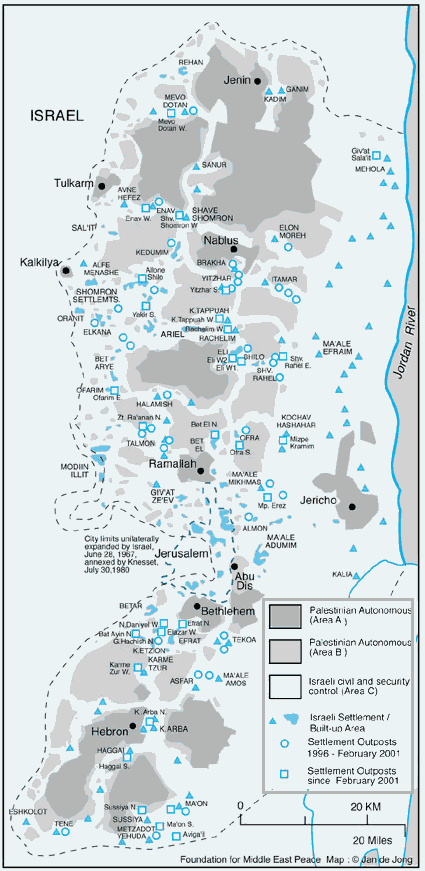
Dok nalozi za rušenje nastavljaju ugrožavati rad humanitarnih organizacija u zoni C na Zapadnoj obali, koja je pod izraelskom kontrolom, Europska unija i humanitarne agencije vrše pritisak kako bi se izmijenila pravila pružanja humanitarne pomoći na tom području. Ulrich Nitschke, voditelj projekta pri Njemačkoj agenciji za međunarodnu suradnju u gradu Ramalli na Zapadnoj obali, tvrdi da je došlo do „znatnog pomaka u politici zemalja članica EU“. Zemlja je na području Zapadne obale podijeljena na 3 zone: A, B i C. Zona A je pod kontrolom Palestinske samouprave, a Zona B pod zajedničkom kontrolom Izraela i Palestinske samouprave. Oko 95% Palestinaca živi na području ove dvije zone iako one pokrivaju tek 40% površine Zapadne obale. Izrael je zadržao vojne ovlasti i punu kontrolu nad izdavanjem dozvola za gradnju u zoni C. Umjesto da provedba projekata koje u zoni C financira EU bude ovisna o Izraelskoj civilnoj upravi i njenim uvjetima za izdavanje dozvole, zemlje EU-a žele promjenu procedura za pružanje humanitarne pomoći. Prvi korak je razvoj pravnih i tehničkih smjernica (master planova) za svaku potrebitu lokalnu zajednicu pod vodstvom lokalnih palestinskih vlasti. Master planovi bi zatim bili predstavljeni Izraelskoj civilnoj upravi, koja treba provjeriti jesu li ispunjeni svi pravni i tehnički uvjeti. „Čim dobijemo zeleno svjetlo da su ispunjeni tehnički uvjeti, donatori iz EU-a čekaju 6 mjeseci. Ne bude li nakon tog razdoblja izdana dozvola, projekt će se provoditi bez dozvole“, najavio je Nitschke. Do sada su predana 24 master plana, a 4 su odobrena od strane izraelske vlade u siječnju 2011, no još nisu izdane nikakve dozvole. Neke zemlje EU-a, uključujući Njemačku, Ujedinjeno Kraljevstvo, Belgiju, Dansku, Francusku, Švedsku i Europsku komisiju oformile su interesnu skupinu koja će se zalagati za ove promjene. Svake godine izraelske vlasti u zoni C ruše domove stotina Palestinaca jer nisu uspjeli dobiti dozvole potrebne za gradnju. Tijekom 2011. raseljeno je oko 1100 Palestinaca zbog rušenja domova od strane izraelskih snaga, što je 80% više nego tijekom 2010. „Izraelske vlasti tvrde da ruše objekte jer nemaju građevinske dozvole. Međutim, u stvarnosti je za Palestince gotovo nemoguće dobiti te dozvole, zbog čega im preostaje jedino da grade bez njih kako bi zadovoljili svoje osnovne potrebe za krovom nad glavom.“ upozorava ravnatelj UN-ovog Ureda za koordinaciju humanitarnih poslova na okupiranom palestinskom području. Prema podacima Ureda tijekom 2011. ukupno je na Zapadnoj obali srušeno 620 objekata, uključujući 62 projekta koje je financirala EU. I protiv samostalnog postrojenja za vjetrenu i sunčevu energiju, koje je na južnom hebronskom gorju, poprištu rušenja i prisilnog raseljavanja tijekom proteklih godina, izgradila organizacija Medico International zajedno s izraelskom organizacijom Zajednica, energija i tehnologija na Srednjem istoku, izdani su nalozi za rušenje. Do sada je ta organizacija, zahvaljujući diplomatskoj i medijskoj kampanji, uspjela spriječiti rušenje svog energetskog postrojenja, no nalozi za rušenje su izdani i ono bi se moglo provesti svakog trenutka. Oko 1500 Palestinaca na južnom hebronskom gorju ovisno je o opskrbi sličnom alternativnom energijom, jer izraelske vlasti onemogućavaju njihovo spajanje na elektroopskrbnu mrežu. Na južnim hebronskim brdima i u Jordanskoj dolini tisuće ljudi nemaju struju, a neizdavanje dozvola od strane izraelskih vlasti onemogućava pružanje adekvatne pomoći pogođenim zajednicama. Tsafrir Cohen iz organizacije Medico International upozorava na opasnu situaciju u kojoj se nalaze humanitarne agencije koje djeluju u zoni C: „Budemo li humanitarnu infrastrukturu gradili samo tamo gdje nam Izrael to dopušta, postoji opasnost da će nas istjerati iz zone C zajedno s Palestincima.“ U Medico Internationalu smatraju da je cilj ovog procesa protjerivanje palestinskog stanovništva iz zone C u gusto naseljene urbane enklave. „Na kraju ćemo raditi u bantustanu“, dodaje Cohen. Neki su se donatori nadali da bismo mogli dobiti dozvole za sustave za prikupljanje sunčeve i vjetrene energije, ali su se njihove nade izjalovile. „Nismo dobili dozvole, pa jednostavno gradimo bez njih“, kaže Elad Orian, suosnivač organizacije Zajednica, energija i tehnologija na Srednjem istoku, i dodaje: „Najmanje 8 samostalnih energetskih sustava koje je naša organizacija instalirala tijekom proteklih godina pod prijetnjom su rušenja“. Tvrdi da je bez dozvole izraelskih vlasti gotovo nemoguće dobiti međunarodne donacije za projekte njegove organizacije.
Read more...
Analysis: Between security reform and occupation in the West Bank
Aliya was one of a few hundred young people who had marched on Sunday 1 July to protest against police brutality which had broken up an earlier demonstration. As the protesters started to call for the resignation of Abdul Latif al-Qadumi, the head of the Ramallah police force, the reaction of the police grew more violent. “No to Dayton's police! Stop the coordination!” was one of the protesters' cries. Lt-Gen Keith Dayton, the former US Security Coordinator for Israel and the Palestinian Authority (USSC), ended his term overseeing US assistance in restructuring Palestinian security forces in 2010, but his legacy - newly trained and equipped Palestinian police and intelligence forces - remains. Others have also helped reform the Palestinian police: the European Union’s Police Advisory Mission EUPOL COPPS (EU Police Coordinating Office for Palestinian Police Support) and more than 17 different states. Created in 2005 as part of the Roadmap to Peace agreement, donors agreed to provide assistance to the Palestinian Authority (PA) to re-establish functioning security forces in the West Bank and Gaza Strip. Since the Hamas takeover of Gaza in 2007, the assistance of the USSC and the EUPOL COPPS mission has been limited to the West Bank. The mandate of these missions is to reform the six different, often competing, Palestinian security services - a legacy of Arafat's divide and rule days - and train and equip them so that they can keep order. Most of the Palestinian security forces were only officially established during the years of the Oslo II Agreement of 1995 together with the new PA. As the second Intifada beginning in 2000 grew violent and many of the freshly equipped recruits took part in battles against Israeli forces, the latter made sure that both infrastructure and operational capacities were destroyed.
Read more...
ISRAEL: New law targets migrant care workers
Israel initially brought in migrants to care for handicapped army veterans. As the remaining population demanded more affordable live-in care, more migrants were encouraged to come. The number of permits issued for foreign carers grew sevenfold between 1996 and 2009, from about 8,100 to about 57,000. Most care-givers in Israel are women from the Philippines, Nepal, Sri Lanka, and other Asian and eastern European countries. Under the current legal regime, the Israeli Interior Ministry does not issue visas for a new employment if caregivers already spent more than four years and three months in Israel. Those working beyond that period are especially vulnerable to exploitation by their employers, as losing the job means losing the permit to stay. ... Meanwhile, Israel has begun a drive to round up foreign migrants in the first stage of a controversial plan to intern and deport thousands deemed a threat to the Jewish character of the state.
Read more...
OPT: Toiling for a pittance on Israeli settler farms
Okupirano palestinsko područje: Težak rad za crkavicu na izraelskim kolonističkim farmama (18. lipanj 2012.)
Abed Dari, koordinator projekta za palestinske radnike izraelske nevladine udruge za zaštitu radničkih prava Kav LaOved, upozorava da je oko 10 000 palestinskih radnika izrabljivano na izraelskim farmama u Jordanskoj dolini na Zapadnoj obali. Iako je u listopadu 2007. izraelski Vrhovni sud presudio da svaki Palestinac koji radi za izraelske poslodavce na Zapadnoj obali treba primati plaću koju jamči izraelski zakon, to se u stvarnosti ne događa, tvrdi Dari. „Presudom visokog suda primjenjeni su izraelski radnički zakoni na Palestince, što je zapravo obvezujuće za sva kolonistička naselja. No provedba je izostala. Prema izraelskom zakonu minimalna plaća iznosi između 180 i 190 šekela (46-49 američkih dolara) za puni radni dan“, tvrdi Eyal Hareuveni, stručnjak za Jordansku dolinu iz izraelske nevladine organizacije za zaštitu ljudskih prava B'Tselem. Vrhovni je sud presudio da „primjena stranog zakona na palestinske radnike i izraelskog zakona na izraelske radnike krši temeljna prava palestinskih radnika i izlaže ih diskriminaciji“. Palestinci imaju malo mogućnosti za neovisnu ekonomsku djelatnost u Jordanskoj dolini, gdje im je zabranjeno koristiti oko 87% zemlje, koja se nalazi u zoni C pod izraelskom kontrolom i stoji na raspolaganju izraelskim kolonističkim naseljima i izraelskoj vojsci. „Zbog cjelokupne situacije u Jordanskoj dolini i izolacije tog područja zbog otežanog pristupa zemlji i drugih ograničenja, na tom je području široko rasprostranjeno siromaštvo“, tvrdi Isra Muzaffar, ravnatelj središnjeg ureda UN-ovog Ureda za koordinaciju humanitarnih poslova na Zapadnoj obali. Problem radničkih prava dodatno kompliciraju palestinski ugovornici koji regrutiraju palestinske radnike za izraelske koloniste. Na taj način poslodavci mogu izbjeći izravno bavljenje radnicima i ne postoji pisani ugovor o zapošljavanju između radnika, ugovornika i poslodavca, tvrde u Kav LaOvedu. „Ugovornici su veliki problem. Pokušavaju dobiti palestinsku radnu snagu što je jeftinije moguće samo kako bi što više zaradili“, napominje Abed Dari. „Pokušali smo pridobiti Palestinsku samoupravu da izvrši pritisak na te podugovornike, ali ništa se nije dogodilo.“ Ugovornici radnicima iz drugih gradova na Zapadnoj obali, poput Nablusa, naplaćuju prijevoz, zbog čega njihova neto dnevna plaća iznosi tek 13 američkih dolara. Kav LaOved zastupa radnike iz Jordanske doline koji su svoje poslodavce tužili na sudu, no većina Palestinaca boji se poduzeti takvo što. „U kolonističkim naseljima vrše pritisak na Palestince. Svi se međusobno poznaju i djeluju poput kartela. Ako kolonističko naselje sazna da neki tip po imenu Muhammad tuži nekog drugog poslodavca, otpustit će sve članove njegove obitelji“, pojašnjava Dari. Dodaje i da između 150 i 200 djece, od kojih neka imaju tek 12 godina, također radi na tim farmama. Drugi izvori broj djece radnika procjenjuju na između 500 i 1000. Muhammad (15), koji je prekinuo svoje obvezno školovanje, radi u staklenicima u izraelskom kolonističkom naselju Tomer. Žali se na težak rad jer temperatura ponekad u stakleniku prelazi 50 stupnjeva. Za 9 sati rada plaćaju ga 18 američkih dolara dnevno, bez ikakvog osiguranja. „Uglavnom zarađuju izraelski poljoprivrednici i međunarodne kompanije. Oni izvoze većinu proizvoda, poput paprika, začina i datulja, koji su postali najvažniji izvor zarade“, kaže Eyal Hareuveni. Djeca rade kako bi svojim osiromašenim obiteljima pomogla preživjeti.
Read more...
LIBIJA:
LIBYA: What the analysts are saying post-elections
Delayed by a month, Libya's first free elections to the transitional 200 member General National Congress (GNC) went off relatively smoothly, with only isolated cases of violence and plundered polling stations. Only 80 of the 200 seats in the GNC are allocated for political parties, with the remaining 120 reserved for independents. The National Forces Alliance (NFA) led by Mahmoud Jibril (described by the Economist as “a sensible modernizing reformer who claims to be something between a secular liberal and a mild Islamist”) won 39 seats of the 80 seats, and the Muslim Brotherhood’s (MB) Justice and Construction Party (JCP) 17, with the remaining 24 seats going to a host of smaller parties. It is unclear which party or parties the 120 independents will tend to support. The GNC will choose a prime minister ahead of general elections scheduled for next year. Observers reported a high voter turn-out; about 60 percent of the electorate voted, according to the Libyan state news agency.
Read more...
EGYPT-LIBYA: Misery for stranded refugees
Ashenafi Geberu, who is originally from Eritrea and used to work as a labourer in Benghazi, said there was no way he could return to Libya: “Any black, they'll kill… If I had a good family and a good country, I'd go back home… I'm tired of [Sallum]. I'd be the first to leave.” According to a 2012 report by Human Rights Watch, thousands of Eritreans flee the country because of the harsh conditions of military service. Last June, the International Federation for Human Rights described the treatment of black Africans in Libya as “alarming”.
Read more...
EGIPAT:
Briefing: The Egyptian revolution undone?
Amr Darrag, chairman of the FJP in the district of Giza and member of the Constituent Assembly, told IRIN: “If you take all these steps together, you come up with a perfect coup.” Amnesty International described the army's decision to grant itself “unrestrained powers” as a threat to human rights, giving it (the army) the ability to reject any attempt by a Constituent Assembly to restrain the military and put it under civilian oversight - or to hold its forces accountable for human rights abuses. “The army's move highlights its determination to both remain above the law and to trample on the rule of law,” said Philip Luther, Amnesty International's director for the Middle East and North Africa in a statement.
Read more...
LIBANON:
Analysis: Bound by conflict, the Syrian-Lebanon crisis
In recent months, the outbreak of conflict in Syria and the influx of thousands of Syrian refugees into Lebanon has renewed and increased those tensions between Shia Alawis generally supportive of Syrian President Bashar al-Assad and Sunni sympathizers of the rebel Free Syrian Army (FSA) and the opposition. More than 30 Lebanese from both sides have been killed in fighting between the two communities since the beginning of the Syrian uprising in March 2011. While a fragile ceasefire in Tripoli - agreed in early June - seems to be generally holding, sporadic clashes happen on a daily basis and it is common to see civilians carrying weapons. While there are clear risks of Lebanon being caught up in the Syrian conflict, the reverse is also true: Syrian antagonists are equally in danger of being dragged into age-old Lebanese sectarianism.
Read more...
ponedjeljak, 25. lipnja 2012.
Uglavnom linkovi - Palestina/Izrael, Libija
rascjepkanost okupirane Zapadne obale (Slika: BIMKOM)
PALESTINA/IZRAEL:
Child arrest (video)
Middle of the night in a-Nabi Saleh (video)
Palestinians in solidarity with European unions
Palestinci solidarni s europskim sindikatima (12. lipanj 2012.)
Koalicija palestinskih sindikata za bojkot, dezinvestiranje i sankcije, široka koalicija koja obuhvaća gotovo sve palestinske sindikate, izrazila je svoju solidarnost sa sindikatima u Europi koji se opiru pogoršanju uvjeta rada, rezovima u javnim službama i gubitku radnih mjesta. „Valovi štrajkova i prosvjeda koji se odvijaju i organiziraju diljem Europe i poraz vlada koje su zagovarale mjere štednje u Francuskoj i Grčkoj podsjetnici su na važnost i moć borbe, te na činjenicu da se obični radni ljudi protive ideološki vođenim nastojanjima da ih se natjera da plaćaju za krizu koju su uzrokovale moćne političke i financijske elite. Te iste elite profitiraju od izraelskog sustava okupacije, kolonizacije i aparthejda nametnutog palestinskom narodu i njegovih svakodnevnih kršenja temeljnih prava i dostojanstva palestinskih radnika i aktivno ih podupiru. Ujedinjuje ih politika beskrajnog rata i nemilosrdnog izrabljivanja. I mi se moramo ujediniti u zajedničkoj borbi za slobodu, pravdu i jednakost. Palestinski sindikati i sindikalni aktivisti solidarni su s vašom borbom. Vaše dostojanstvo je naše“, naveli su u svojoj izjavi. Palestinski su sindikati također zahvalili na inspirativnoj solidarnosti koju su europski sindikati palestinskom narodu iskazali u obliku bojkota, dezinvestiranja i sankcija protiv Izraela. Sindikalni bojkoti i dezinvestiranja usmjereni protiv Izraela postali su vodeći oblik solidarnosti s palestinskim radnicima. Načela i taktike BDS-a službeno su poduprli nacionalni sindikalni savezi u Južnoj Africi, Ujedinjenom Kraljevstvu, Škotskoj, Irskoj, Norveškoj, Švedskoj, Belgiji, Baskiji, Brazilu i drugim zemljama diljem Latinske Amerike, te nekoliko nacionalnih i lokalnih sindikata. Sindikati diljem svijeta također namjeravaju revidirati i čak i prekinuti svoje veze s Histadrutom, izraelskim kolonijalnim sindikatom koji oduvijek igra ključnu ulogu u izraelskom sustavu ugnjetavanja Palestinaca. Histadrut je objavio izjave potpore izraelskoj 22-dnevnoj agresiji na Gazu 2008-2009. i izraelskom pokolju humanitarnih aktivista Flotile slobode 2010. Histadrut je sudjelovao u etničkom čišćenju Palestinaca tijekom Nakbe 1948, doprinosi izgradnji ilegalnih izraelskih kolonističkih naselja u kojima ima financijske interese, nije djelovao s ciljem sprječavanja sustavne diskriminacije nauštrb palestinskih građana Izraela i zadržao je sredstva u vlasništvu palestinskih radnika. Koalicija palestinskih sindikata pozvala je sindikate diljem svijeta na prekid veza s Histadrutom. Sindikati diljem svijeta provode konkretne kampanje i akcije solidarnosti s Palestincima, poput blokada izraelskih brodova od strane lučkih radnika u Južnoj Africi, Indiji, Švedskoj, Grčkoj, Turskoj i Kaliforniji, te kampanje britanskog prijevoznog sindikata protiv tvrtke Alstom, zbog njenog suučesništva u ilegalnom okupacijskom projektu izgradnje infrastrukture, norveškog sindikata Fagforbundet protiv Ahave i drugih tvrtki koje su suučesnice u izraelskim kršenjima međunarodnog prava. Sindikalne kampanje koje ciljaju suučesništvo korporacija i država u izraelskim kršenjima međunarodnog prava ključni su i učinkovit oblik solidarnosti s palestinskom borbom, a koalicija palestinskih sindikata za BDS izrazila je svoju spremnost da surađuje s članovima sindikata iz cijelog svijeta kako bi se razvile ovakve aktivnosti i ojačala zajednička borba za ljudska prava, socijalnu pravdu i dostojanstven život svugdje na svijetu.
Read more...
A-Nabi Saleh: Forces enter homes looking for demonstrators (video)
Shelter Advocacy Fact Sheet 4
The Gaza Strip remains occupied by Israel and is subject to almost daily conflict, within a context of wide reaching Israeli restrictions on access and freedom of movement. Israel is currently enforcing an access restricted area of between 300 and 1000 meters from the security fence that separates Israel from Gaza. These restrictions and enforcement, sometimes through lethal force, have prevented access to housing, land and property, as well as to schools and one third of Gaza's agricultural land.
Read more...
The Prohibited Zone - Israeli planning policy in the Palestinian villages in Area C
Between the years 2000 and 2007, the Israeli Civil Administration demolished 1,626 Palestinian buildings in Area C, which covers 60 percent of the West Bank, and where the Civil Administration has full planning authority. Although this is not a new phenomenon, the underlying factors behind house demolitions are not well known. The main purpose of The Prohibited Zone is to unveil these factors and to describe how Israel is using planning tools in an attempt to control Palestinian building and to restrict its spatial expansion. The report indicates that the main reason for the large number of house demolitions in Area C is the Israeli planning policy. In most Palestinian locales in Area C, the only planning schemes still effective are the Mandatory Regional Outline Plans approved some 60 years ago. In the past, the Israeli military regime issued thousands of building permits, based on these plans. But today, the Civil Administration's stringent and erroneous interpretation of the Mandatory plans barely allows building permits to be issued by virtue of these plans. The Civil Administration has prepared new outline plans for a small number of Palestinian villages in Area C. However, these plans do not meet the needs of the villages, and their main aim is to delimit the built-up area in the Palestinian locales and to prohibit its expansion. The primary victims of this policy are the 150,000 Palestinians who live in Area C, but it has far-reaching consequences for millions of citizens living in Areas A and B (together, 40 percent of the West Bank), which are under Palestinian planning authority. The building restrictions imposed by the Civil Administration in Area C prevent the construction of vital infrastructure for the Palestinian population of the entire West Bank, and impair the spatial connections between the various Palestinian locales. The chief aim of the Civil Administration's planning policy in Area C is to restrict the demographic growth of its Palestinian population and to guarantee large reserves of land for Israeli interests, primarily for settlements.
Read more...
El Araqib against JNF (video)
B'Tselem: Human Rights In The Occupied Territories 2011 Annual Report
In the West Bank, two and a half million Palestinians live under Israeli military occupation while settlers live in enclaves of Israeli law within the same territory. Individual acts of violence by extremist settlers periodically capture the headlines, and discriminatory and inadequate law enforcement is indeed a concern. However, the major human rights violations result from the settlements themselves: their extensive exploitation of land and water, the massive military presence to protect them, the road network paved to serve them and the invasive route of the Separation Barrier, which was largely dictated by the settlements. Israeli civilians living in the West Bank are also subject to violence. This year, five members of the Fogel family were shot and stabbed to death in their home in the Itamar settlement, and a father and his infant son were killed when their car crashed after rocks were thrown at it by Palestinians. In the Gaza Strip, some one and a half million Palestinians are almost completely isolated from the outside world. While people can now leave Gaza through Egypt, they cannot travel to the West Bank, with harsh implications for family ties, the economy and educational opportunities. Israel fully controls the movement of goods. It allows import of humanitarian aid and consumer goods, however raw materials for construction, industry and agriculture are much more limited, and exports are miniscule.
Read more...
B'Tselem: Under the Guise of Legality - Israel's Declarations of state land in the West Bank
Professedly, Israel acknowledges that the West Bank is under belligerent occupation and is not part of its sovereign territory. This admission implies acceptance of the obligation to act in accordance with international law, which forbids the occupying power to change the local Law in force in the occupied area on the eve of its occupation, unless necessary for security needs or for the benefit of the local population. The obligation to respect the local Law refers not only to local legislation, but also to the rulings made by the courts of the states that ruled the area prior to its occupation. Israel's declarations policy does not meet these requirements. It contradicts the Law as interpreted and applied by the British Mandate and the Kingdom of Jordan. This contradiction is evident in three principal aspects:
1. The type of cultivation that allows a private person to acquire ownership rights in land. The Mandate authorities and the Jordanian government considered patch cultivation of rocky land to meet the requirements of article 78 of the Ottoman Land Code. Both concluded that such patch cultivation grants the farmer ownership of the entire parcel. This interpretation of article 78 was also established in a ruling by the Mandatory Supreme Court. In contrast, Israel applied in the West Bank a strict reading of article 78: according to its interpretation, in rocky areas, only cultivation encompassing at least 50 percent of the total area of the parcel will grant ownership rights to the farmer. By changing the interpretation of article 78 of the Land Code, which had been customary in the West Bank before 1967, Israel justified its decision to declare large areas of rocky mountain land that were under patch cultivation as government property, despite the position of the states who ruled the West Bank prior to 1967 who considered these lands to be private Palestinian property. In this case, Israel's interpretation deviated so much from that applied in the area prior to its occupation, that it constitutes a change in the statute itself.
2. Cessation of cultivation after continuous cultivation for the prescriptive period. Israel also disregarded the judgments of the Mandatory Supreme Court and of Israel's Supreme Court, whereby a person who cultivated unregistered miri land for 10 years acquired ownership rights in the land, so that cessation of cultivation afterwards does not prejudice his rights, even if the land was not registered on his name in the land registry. By an amendment to the law, within the framework of a change to the Order Concerning Government Property, Israel created a legal situation in which cessation of cultivation for several years completely nullified the person's rights in the land, even if he or his family had cultivated it for decades before.
3. Classification of designated matruka land as government property. With respect to designated matruka land – primarily grazing land used by residents of a specific village for many years – Israeli declarations policy deviated from the way the states that previously ruled the West Bank had applied the law, and disregarded the binding court judgments. Unlike the situation with miri land, in which private persons can acquire rights, designated matruka is by definition public land assigned for the specific use of members of a particular community and is not government property. Certainly, it cannot be declared state land and allocated for the development of settlements. These statutory provisions did not prevent Israeli authorities from declaring designated grazing lands as government property, thereby revoking the public rights of residents of Palestinian communities that had used these lands for long periods of time.
Since the beginning of its rule in the West Bank and until the present, Israel has declared hundreds of thousands of dunams as state land. ...
...
The declarations policy has therefore three fundamental defects: it contradicts fundamental relavent provisions of substantive Law; it conflicts with the way the states that previously ruled the area applied the Law; and it is incompatible with the rulings of the authorized courts that interpreted the Law. In many cases, declarations made by the Custodian were not merely technical actions of taking possession of land that was anyway government property. Rather, they involved change in ownership status of the land, from Palestinian private or designated public property to state land.
The situation is aggravated by the fact that these declarations were made in order to enable Israel to establish settlements in the occupied territory – an action prohibited under international law. Thus, not only were the declarations unlawful, but their motive was also illegal: to prevent Palestinian use of the land and to transfer it to the sole use of Israeli citizens. Even had all the declared state land been government property under the substantive Law, the Custodian was not authorized to allocate it for Israeli settlements.
Read more...
LIBIJA:
Analysis: Libyan minority rights at a crossroads
Since Muammar Gaddafi's fall seven months ago, Libya's non-Arab minorities, including an estimated 250,000 Tuaregs, have begun more vehemently to insist on their rights. “Gaddafi's policy was 'keep your dog hungry so that he follows you',” said one Tuareg activist, al-Hafiz Mohamed Sheikh. “This means keeping people in need. With Tuaregs, he said many times that we would have our rights, but he never fulfilled his promises. Sometimes he would favour some individuals, but not whole communities.” Flying over the ramshackle houses in Tayuri settlement in Libya's southwestern city of Sebha are the blue, green and yellow flags of the Imazighen (non-Arab minorities). During Gaddafi's time, the Imazighen, including the Tuaregs, experienced cultural and political marginalization, with the regime instituting an all-encompassing pan-Arabic ideology and refusing to recognize them as a distinct ethnic group indigenous to the country and the region.
Read more...
srijeda, 31. kolovoza 2011.
Palestinski maloljetnici u izraelskim zatvorima, napad u Tel Avivu i druge vijesti, linkovi…
PALESTINA/IZRAEL:
Nablus man wounds 8 in Tel Aviv
Palestinac iz Nablusa ranio 8 osoba u Tel Avivu (29. kolovoz 2011.)
8 je osoba ozlijeđeno u napadu Palestinca koji se ukradenim taksijem zabio u skupinu pograničnih policajaca ispred jednog noćnog kluba u Tel Avivu i potom ih napao nožem. U napadu su ranjena 4 pograničnih policajca i 2 prolaznika. Jedna je osoba u kritičnom stanju, 2 su teško ozlijeđene, a ostali su zadobili lakše ozljede. Policija tvrdi da je napadač (20), iz grada Nablusa na Zapadnoj obali, u 1:40 ujutro ukrao taksi i tom prilikom lakše ozlijedio ruku taksi vozača kojeg je izvukao iz njegovog taksija. Potom se zabio u skupinu pograničnih policajaca ispred kluba HaOman 17 i ranio 2, zatim je izašao iz automobila i nožem napao slučajne prolaznike i pogranične policajce, pri čemu su ozlijeđene 4 osobe, uključujući 2 pograničnih policajaca. Napadač je svladan, pri čemu je zadobio lakše ozlijede, i odveden u bolnicu gdje ga je ispitala izraelska unutarnja sigurnosna agencija Shin Bet. Izraelski mediji javljaju da je u napadu bilo 8 ozlijeđenih. Izraelska je policija u stanju visoke pripravnosti od napada naoružanih napadača 18. kolovoza kada je sjeverno od grada Eilata ubijeno 8 Izraelaca, a na granici s Pojasom Gaze i Sinajskim poluotokom pojačan je broj vojnika s ciljem sprječavanja takvih napada.
Read more…
B'Tselem: No Minor Matter: Violation of the Rights of Palestinian Minors Arrested by Israel on Suspicion of Stone-Throwing, July 2011 (video)
B'Tselem: Kršenja prava palestinskih maloljetnika koje je Izrael uhitio zbog sumnje da su bacali kamenje, srpanj 2011.
Od početka 2005. do kraja 2010. najmanje je 835 palestinskih maloljetnika uhićeno i izvedeno pred izraelske vojne sudove na Zapadnoj obali pod optužbama da su bacali kamenje. 34 su imali 12 i 13 godina, 255 14 i 15, 546 16 i 17 godina. Samo je jedan od svih 835 oslobođen krivnje; svi su ostali proglašeni krivima. Izraelska organizacija za ljudska prava na okupiranim palestinskim područjima B'Tselem je intervjuirala 50 maloljetnika koji su opisali svoja iskustva od trenutka uhićenja do časa kad su pušteni iz zatvora. Njihova svjedočanstva ukazuju na brojna ozbiljna kršenja njihovih prava. 30 ispitanih maloljetnika je izjavilo da su ih vojnici uhitili u njihovim domovima usred noći i da njihovim roditeljima nije bilo dopušteno da pođu s njima. Samo 3 maloljetnika koji su bili uhićeni u noći ispitani su te iste noći. 19 ih je ispitano slijedećeg jutra, 3 poslije podne, a 2 su ispitana tek 5 dana nakon uhićenja. S 19 ih je nasilno postupano i prijećeno im je tijekom ispitivanja. 23 su izjavila da im satima nije bilo dopušteno otići na WC, ni jesti ni piti. Za razliku od izraelskog zakona vojni pravosudni sustav nema alternative držanju u pritvoru do okončanja postupka. U većini slučajeva suci maloljetniku određuju pritvor do okončanja postupka. Od 133 slučajeva maloljetnika kojima je suđeno za bacanje kamenja koje je obradila palestinska organizacija za prava djeteta DCI-Palestine 2009. i 2010. godine, samo ih je 23 (17%) pušteno da uz jamčevinu sa slobode čekaju suđenje. Zbog ovoga mnogi maloljetnici biraju nagodbu, u kojoj oni priznaju optužbe protiv sebe u zamjenu za kraću zatvorsku kaznu, strahujući da će, ako budu išli na suđenje, u zatvoru provesti dugo vremensko razdoblje potrebno za dovršetak suđenja. Vojni sudovi zatvorsku kaznu, umjesto kao alternativnu, odabiru kao glavnu kaznu. U razdoblju između 2005. i 2010. godine 93 % maloljetnika osuđenih za gađanje kamenjem osuđeno je na zatvorsku kaznu, u duljini od nekoliko dana do 20 mjeseci. 19 maloljetnika mlađih od 14 godina, koji su činili 60% te dobne skupine, osuđenih za gađanje kamenjem tijekom ovog razdoblja, osuđeni su na zatvorske kazne. Stavljanje maloljetnika mlađeg od 14 godina u zatvor je u Izraelu zakonom zabranjeno. Djeca mlađa od 14 godina na dan izricanja presude bila su osuđena na zatvorske kazne u trajanju od do 2 mjeseca, 26% maloljetnika u dobi od 14 i 15 godina odslužilo je zatvorske kazne u trajanju od 4 mjeseca ili više, dok je među maloljetnicima u dobi od 16 i 17 godina 59% njih odslužilo zatvorske kazne od 4 ili više mjeseci. Tijekom izdržavanja kazne većinu maloljetnika koje je intervjuirao B'Tselem nisu posjetile njihove obitelji. Od 20 maloljetnika koji su u pritvoru ili zatvoru proveli više od tjedan dana, samo je jedan izjavio da su ga redovito posjećivali svaka 2 tjedna, dok su još 4 rekla da su nekoliko puta primili posjet. Budući da spadaju pod sigurnosne zatvorenike, maloljetnici koji su osuđeni zbog gađanja kamenjem nemaju dopuštenje da koriste telefon. Zatvorske vlasti omogućuju im da uče samo neke predmete koje su pohađali u školi što umanjuje njihove mogućnosti da uspješno završe tu godinu školovanja.
Read more…
B'Tselem: 24 Aug. '11: Rare decision by State Attorney's Office: prosecute officer responsible for killing of Palestinian
B'Tselem: 24. kolovoz 2011: Rijetka odluka Ureda državnog odvjetnika: procesuirat će se vojnik odgovoran za ubojstvo Palestinca
Na zahtjev koji je uputio B'Tselem Ured državnog odvjetnika najavio je 18. kolovoza 2011. Visokom sudu pravde da će vojnik odgovoran za ubojstvo Firasa Qasqasa počinjeno u prosincu 2007. biti procesuiran. Prije gotovo 4 godine izraelski su rezervisti ubili Qasqasa iz udaljenosti od nekoliko stotina metara, unatoč tome što je bio nenaoružan i nije učinio ništa što bi ugrožavalo vojnike. Razumno je pretpostaviti da odluka da se ovaj slučaj procesuira ne bi bila donesena, da se B'Tselem nije uključio. B'Tselem je dokumentirao mnoge slučajeve ubojstava Palestinaca koje Istražna jedinica vojne policije nikad nije istražila. B'Tselem je dokumentirao i slučajeve ubojstava Palestinaca od strane vojnika koje je Istražna jedinica vojne policije istraživala, ali Ured državnog odvjetnika nije odlučio poduzeti nikakvu akciju. U nekim se slučajevima još uvijek čeka na odluku, iako su prošle godine od završetka istrage. Firasa Qasqasa (32) ubili su izraelski vojnici 2. veljače 2007. otvorivši na njega vatru u selu a-Tira, u okolici Ramalle. Qasqas je živio u Batiru, na betlehemskom području, a u a-Tiru je otišao s obitelji posjetiti rodbinu. Tog je dana poslije podne Firas s 2 šogora šetao na otvorenom području pored seoskih kuća. Skupina vojnika je na njih s udaljenosti od otprilike 500 metara otvorila vatru. Qasqasa je metak pogodio u leđa i izašao mu kroz želudac. Odveden je u bolnicu u Ramallu gdje je preminuo od posljedica ovih ozljeda.
Read more…
Israeli army trains West Bank settlers
Izraelska vojska obučava koloniste na Zapadnoj obali (30. kolovoz 2011.)
Izraelska vojska obučava ilegalne izraelske koloniste na Zapadnoj obali kako bi ih pripremila za odbijanje potencijalnih napada nasilnih prosvjednika na okupiranim područjima za vrijeme nastojanja palestinskih vlasti da Ujedinjeni narodi priznaju Palestinu kao neovisnu državu u rujnu 2011. Izraelski list Haaretz je izvijestio da vojska uvježbava sigurnosne voditelje u kolonističkim naseljima i njihove timove, te da im je podijelila suzavac i granate za omamljivanje kako bi ih opremila protiv nereda koji bi mogli izbiti u to vrijeme. Većina kolonista već otprije ima vatreno oružje. Sada vojska pripadnike sigurnosnih snaga u kolonističkim naseljima namjerava opskrbiti sredstvima za rastjerivanje prosvjeda.
Read more…
Gaza teen dies from injuries sustained in Israeli airstrikes
Palestinski maloljetnik preminuo od ozljeda zadobivenih u izraelskim zračnim napadima na Gazu (29. kolovoz 2011.)
Jedan je palestinski maloljetnik (14) preminuo u Gazi u ponedjeljak nakon što je teško ranjen prije 10 dana u izraelskom zračnom napadu na Beit Lahiyu u Pojasu Gaze. Kratko nakon ponoći 19. kolovoza 2011. izraelski su ratni zrakoplovi izvršili niz napada na gradove Gazu, Beit Hanoun, Beit Lahiya i Khan Younis. Ovi su napadi uslijedili nakon što je u izraelskom gradu Eilatu u napadu vatrenim oružjem ubijeno 8 Izraelaca. Izrael je za napad okrivio palestinsku organizaciju Odbor narodnog otpora sa sjedištem u Pojasu Gaze. U izraelskom bombardiranju Pojasa Gaze u 4 je dana ubijeno 13, a ranjeno nekoliko desetaka osoba.
Read more…
Open letter to Israeli and Palestinian leaders
Otvoreno pismo izraelskim i palestinskim čelnicima (29. kolovoz 2011.)
25 palestinskih i izraelskih novinara uputilo je otvoreno pismo izraelskim i palestinskim čelnicima u kojem pozivaju na poštivanje prava novinara da obavljaju svoj posao na izraelskom i palestinskom teritoriju. Novinari upozoravaju da je predstojeći pokušaj dobivanja priznanja palestinske države od strane Ujedinjenih naroda događaj od interesa za cijelu regiju i svijet, ali i za sve koji žive u Izraelu i na okupiranim palestinskim područjima. Zbog toga je važno da novinari mogu svoj posao obavljati bez straha od napada ili zakonskog progona i imati neometani pristup i mogućnost prikupljanja i objavljivanja informacija.
Read more…
SIRIJA:
Activists: Syrian forces kill 7 on Eid Al-Fitr
Syrian forces killed seven people Tuesday when they opened fire in several towns to disperse protesters who emerged from mosques on the first day of the Muslim Eid Al-Fitr feast, activists said. The Local Coordination Committees said in a statement that "seven people were killed on the first day of Eid Al-Fitr in Syria, including four in the town of Al-Harra and two in Inkhil, in the Daraa province, and one in the (central) city of Homs." ... On the last day of Ramadan Monday, 17 people were killed by Syrian forces and dozens wounded as troops and security forces conducted raids in several areas across the country, according to the Britain-based Observatory. ... More than 2,200 people have been killed in the Syrian regime's crackdown on pro-democracy protests since mid-March, according to United Nations' figures.
Read more…
6 killed in Syria raids on dissidents
A child was among five people killed when troops and security forces opened fire during search operations in the Sarmin district of the northwest province of Idlib, the Syrian Observatory for Human Rights said. One person died when part of his home was leveled as Syrian forces raked houses in Sarmin with heavy machine-gun fire, the head of the Britain-based Observatory, Rami Abdel Rahman, said. At least 60 people were also wounded in Sarmin and six houses were partly destroyed, he told AFP by telephone. A sixth person was killed when security forces raided his home at dawn in the town of Qara outside Damascus during an arrest operation, the Local Coordination Committees reported. Around 10 trucks and armored vehicles entered Qara, said the group which organizes anti-regime protests and has militants on the ground across Syria. It said some 40 people whose names were on a "wanted list" were detained. Meanwhile, troops backed by tanks and personnel carriers early on Monday stormed the village of Hit, two kilometers from the border with Lebanon, south of the central city of Homs, Abdel Rahman said. "There has been high intensity gunfire since 9:00 am (0600 GMT)," he told AFP, adding that at least five people were wounded and 13 were arrested. "The homes of activists wanted by the authorities were torched," he added. Activists also reported six people killed by security forces on Sunday. … More than 2,200 people have been killed in the Syrian regime's crackdown on pro-democracy protests since mid-March, according to the United Nations.
Read more...
LIBIJA:
Anxious Libyan families await news of loved ones
Anxiety is written clear on the faces of those gathered at the port after the rebels said on Sunday that nearly 50,000 prisoners, mostly rebels fighting Gadhafi's forces over the past months, are still missing. ... Relief is also evident on the face of Ahmed Omar Shakmak, who had been arrested on Tripoli's Green Square and jailed. When asked why, he just smiles and says: "Because, like everyone else, I do not like Gadhafi and his sons." "Thank you, God! I got out of prison alive. We had no food or water. ..."... Fathi Al-Jamaa Majhabi is another survivor who feels lucky to be alive. Captured early on in the conflict outside the eastern oil hub of Ras Lanuf by Gadhafi's forces, he says he was tortured during the six months he spent in prison. "They gave me electric shocks in my legs, my arms, all over my body. It was a nightmare. It's unimaginable, but I'm finally free. I'm so happy," says the exhausted man before leaving the dockside, his relatives helping him to walk. ... From time to time a cluster of rebel fighters boards the vessel and returns with young men, some still teenagers. "These are Gadhafi's men. We brought them here to judge them. They'll be treated fairly," says one, guarding five teenagers before they are quickly driven off in a pick-up.
Read more...
subota, 9. travnja 2011.
Linkovi o prosvjedima u Hrvatskoj, Libiji
Hrvatska:
Republic of Coruptia + FOTOGALERIJA!
Stotinjak građana danas je šetalo pješačkim prijelazom ispred ulaza u podzemnu garažu šoping centra Cvjetni u Zagrebu. I to baš u popodnevnim satima od šest do sedam i trideset kad su VIP uzvanici dolazili na otvaranje ovog ekskluzivnog zdanja. Iznad same garaže izvjesili su transparent na kojem je pisalo: "Republic of Coruptia". Na taj način željeli su još jednom upozoriti na niz nepravilnosti vezanih uz projekt radoholičara Tome Horvatinčića i pokazati da se ne mire s uzurpiranjem zagrebačkih javnih površina. No, uzrujane goste, među kojima je bio i Ivan Zvonimir Čičak, uskoro je zaštitila ni manje ni više nego interventna policija koja se ovog puta pokazala potpuno nedoraslom za zadatak. U uzavreloj atmosferi u kojoj su aktivisti svojom šetnjom usporavali ulazak i prolaz automobila u garažu, policajci su gurali "šetače", a jednog od njih su i priveli jer se zaustavio na prolazu.
HOTO i MUP vole se javno! + FOTOGALERIJA i VIDEO!
Nakon što su preko čitave zgrade naslonjene na kompleks Cvjetni razvili ogroman transparent s natpisom "Totalna prevara" i prošetali do ulaza u garažu, gdje ih je dočekalo šezdesetak pripadnika interventne jedinice, prosvjednici su pred ulazom u centar posvjedočili kako je policija odlučila stati u zaštitu vjernih potrošača. Zapriječili su ulaz, a kupce oštro odvojili od mirnih prosvjednika. Predsjednik Zelene akcije Tomislav Tomašević potom je okupljene pozvao u razgledavanje "javnog" prostora i u potragu za nikad izgrađenim prolazom od Cvjetnog do Gundulićeve. Prosvjednike je i unutar šopingholičarskog "raja" dočekao veći broj policajca i Horvatinčićeve garde. Nakon uvodnog zviždukanja, zaštitari su jednoj aktivistkinji pokušali oduzeti transparent. Kad im ga nije željela predati, okružili su je. Njeni kolege i novinari su joj se pokušali približiti, ali ih je garda nemilosrdno gurala. Tada je neki prosvjednik, koji je dovikivao zaštitarima da oni to ne smiju raditi, kod jednog od zaštitara tanjih živaca izazvao provalu gnjeva i ovaj je krenuo na njega. Kolege su ga pokušale smiriti, ali im nije pošlo za rukom pa je došlo do velikog naguravanja u kojem je sudjelovala i policija. .... U općem kaosu policija nije birala sredstva da se "obrani" od prosvjednika - odguravanje štitovima, vrijeđanje i hapšenje.
Reagiranje na divljanje zaštitara nakon prosvjeda
Pred kraj prosvjeda policija i zaštitari su zabranili ulazak prosvjednicima u centar “Cvjetni” čime se potvrdilo da Cvjetni nije nikakva nova ulica niti javni prostor, već hodnik shopping centra tj. privatni prostor koji kontrolira “Hoto grupa” sa svojim privatnim zaštitarima. Nakon policijske blokade prosvjed ispred centra je završen, a manji broj prosvjednika je individualno ušao u centar kako bi vidjeli gdje je prolaz do Gundulićeve na osnovu kojeg je ovaj projekt i dobio dozvole. Incident je počeo kada je jedna djevojka unutar centra razvila transparent, a privatni zaštitari su na to divljački reagirali hvatajući okolne prosvjednike za vrat. Nastalo je sveopće guranje nakon čega je većina građana koji su sudjelovali u prosvjedu napustila centar. Naglašavamo da, koliko nam je poznato, nije došlo do nikakve štete na privatnoj imovini niti ozljeđivanja policajaca, zaštitara ili kupaca u centru. S druge strane potvrđeno je da je došlo do ozljeđivanja nekoliko nenasilnih prosvjednika, koja će se tokom dana prijaviti policiji. ... Pozivamo građane da se povedu primjerom mnogih građana, uključujući i predsjednika Josipovića, te da bojkotiraju kupovanje u centru i parkiranje u garaži.
Sramota: Policajac u Cvjetnom udario gospođu od 64 godine šakom u leđa (video)
"Sigurna sam da se radilo o jednom od policijskih šefova, jer je taj policajac držao megafon u ruci i izdavao naredbe. Pitala sam ga izvan kompleksa da mi da broj svoje značke, no to je odbio napraviti. Ipak, dao mi je ime i prezime", ispričala nam je gospođa dodavši kako je okolne fotoreportere zamolila da snime ovog policajca kako mu ne bi zaboravila lice.
Kaos u Hoto centru: Pogledajate kako su agresivni Horvatinčićevi zaštitari "smirivali" prosvjednike (video)
"Kakva je to ulica u kojoj se ne može prosvjedovati? Dobili smo ulicu, a izgubili dio javnog prostora za privatnu garažu i privatni centar. Zauzvrat su nam dali jedan hodnik u shopping centru. Za ovaj projekt je bilo nužno da se izglasa javni interes. To je krinka! Kakav je to javni interes? Njihove dvorane se komercijalno iznajmljuju i nema prolaza do Gundulićeve ulice."
FOTO: Zaštitari i policija udarali djevojke i starice! (video)
Snažan udarac rukom preko leđa dobila je i jedna starija prosvjednica. Tvrdi da ju je policajac udario iz čistog mira, te da ju je nakon toga gurnuo dalje od sebe. Nakon završetka prosvjeda pronašla je policajca koji ju je udario te ga je zatražila ime i broj značke, ali je policajcu davanje tog podatka zabranio njegov nadređeni.
"Vlada leti u zrak": Članovi Vlade i parlamenta "odletjeli" u nepoznato
Uz odbrojavanje od 10 do 1 prosvjednici su otpustili sve balone koji su sada nad zagrebačkim nebom. Prosvjednici mašu i viču "Ode Vlada" i "Vlado, odlazi". "Otišli su u nepoznatom smjeru", komentar je jednog od prosvjednika. Prije toga su se cjenkali, parodirajući potkupljivost političara, pa je prosvjednik koji je imao balon s imenom Slavka Linića nudio ostalima da ga kupe za 200 kuna. Ako i nije okupio previše ljudi, ovaj prosvjed je protekao u smijehu i dobrom raspoloženju, s jednim od domišljatijih performansa.
Totalna prevara! - VIDEO
Policija brutalno na prosvjednika (video)
Libija:
LIVE: Libyan Unrest: Former Libyan energy minister Omar Fathi bin Shatwan has escaped to Malta
1:53am: In a live call, a doctor from Misrata says that women, children, and old men are his patients in the hospital as casualties continue to shift towards the civilian population.
10:26am: UN says that Misrata is in ”grave danger”.
4:55pm: Media watchdog Reporters Without Borders reports 26 journalists were today expelled by the Libyan government 'on the grounds that their visas had expired'. The watchdog also expressed its concern over one Spanish, and one South African, and 2 US journalists, who have not been seen since Monday. Around 100 foreign reporters are currently covering the conflict from within Libya.
5:13pm: People in the Libyan city of Misrata are crammed five families to a house in the few safe districts to try to escape mortars raining down from government forces, a rebel spokesman said on Thursday. Troops loyal to Libyan leader Muammar Gaddafi have mounted mortars on the rooftops of buildings, allowing them to extend their range into almost every part of the city, said the rebels.
Libya Live Blog - April 7
2:05am The United Nations on Wednesday called for a cessation of hostilities around the Libyan city of Misurata to get help to the wounded and let people escape fighting between Muammar Gaddafi's forces and opposition rebels. "The situation on the ground is critical for a large number of people who immediately need food, clean water and emergency medical assistance," said UN under secretary general for humanitarian affairs, Valerie Amos, who made the appeal.
Libya: Belarus mercenary 'paid £1,900 a month to help Gaddafi forces'
Five hundred Belarusian advisers were in Libya before the war broke out though some had since been evacuated, it added. While the mercenary named as Mikhail said he was working for the Libyans as a private contractor, it was not clear whether some of the other advisers were on official secondment from the Belarusian armed forces or also hired guns. Witnesses in Libya claim to have spotted Belarusian mercenaries fighting on Col Gaddafi's side but the Belarusian foreign ministry has angrily dismissed the alleged sightings as false rumours designed to tarnish its reputation. Belarus, a former Soviet republic known as Europe's last dictatorship, has long enjoyed close ties with Col Gaddafi's regime. Its president, Alexander Lukashenko, refers to the Libyan leader as "Brother Muammar".
Libya Live Blog - April 8
12:21pm Coast guards have said that a boat laden with 171 people fleeing Libya have arrived in Malta. They are expected to undergo health checks before being taken to an immigrant centre on the island. More than 1,000 refugees have arrived in Malta in the past few days, and some 150 have been lost at sea in an attempt to reach the island.
1:51pm UNICEF, the UN's agency for children, says snipers are targeting children in the besieged city of Misurata.
Saudijska Arabija:
Saudi reforms are expedited: Western governments most impressed
"A total of 30 officials of the Commission for the Promotion of Virtue and Prevention of Vice (Haia) have been trained on how to deal with cases of black magic. The three-day training program was held in the Eastern Province city of Al-Ahsa. The commission has achieved remarkable successes in combating black magic in various parts of the country. It has set up nine specialized centers in the main cities to deal with black magicians. The majority of people arrested for practicing black magic in the Kingdom are Africans and Indonesians. According to a report received by Arab News, a single specialized center had dealt with 586 cases involving black magic, showing the enormity of the problem."
ponedjeljak, 4. travnja 2011.
Linkovi – prosvjedi u Hrvatskoj, Libija, Sirija
Prosvjedi u Hrvatskoj:
Na krcatoj špici nema mjesta na terasama, prosvjednici im poručili "Jebala vas kavica"
"Dragi naši sugrađani, ovo su i vaši prosvjedi, trebamo i vašu potporu", poručuje se preko megafona svim slučajnim prolaznicima i onima koji povorku promatraju iz tramvaja. Hoda se Zvonimirovom.
Stanarka u Mihanovićevoj zalila prosvjednike vodom
Uz pjevanje 'Ne možemo stati!' prosvjednici se kreću Ulicom Crvenog križa prema zgradi Hrvatskih autocesta. Zgradu su okružili. 'Ostavka, Kalmeta!', 'IGH, lopovi!' ori se iz stotina grla.
Kalmeta, ostavka! + FOTOGALERIJA
Vidljivo ideološki podijeljena prosvjedna povorka oko 19 sati uputila se do dobro znanog odredišta - središnjice HDZ-a. Na putu do Trga žrtava fašizma kolona se zaustavila ispred Hrvatske pošte uz povike "Ne damo poštu!" te Hrvatske narodne banke koju je čuvalo petnaestak interventnih policajaca. Ispred središnjice je održana minuta šutnje za žrtve HDZ-ove politike i sve isprane mozgove. Kako je već ranije najavljeno u medijima, prosvjednicima su ovoga puta na meti bila državna poduzeća. Po prvi put u šest tjedana, povorka je otišla do Hrvatskih autocesta gdje je svoj danak platio Božidar Kalmeta. Uz razdragane HAC-ove radnice koje su prosvjednicima mahnule kroz prozor i povike "Kalmeta ostavka", kolona se Branimirovom uputila i do druge Kalmetine podružnice - Hrvatskih željeznica. Na putu do tamo još su jednom svratili do Karamarkovog stana i pokazali mu srednji prst kao osvetu za događaje s prošlog antivladinog prosvjeda.
Javni interesu, počivao u miru! + FOTOGALERIJA
Teodor Celakoski iz Prava na grad podsjetio je da je izgradnja ovog projekta omogućena na temelju javnog interesa - dvorana za javne sadržaje koje će se komercijalno iznajmljivati, Cvjetnog prolaza koji ne postoji i same rampe koja je nauštrb javnog dobra izgrađena u pješačkoj zoni. Podsjetio je kako se projekt Cvjetni financira iz nepoznatih izvora te kako niti dan danas čitav slučaj nije pravosudno riješen budući da u ladicama institucija još uvijek stoje kaznene prijave zbog sumnje u nezakoniti ugovor. Celakoski je stoga čitav projekt okarakterizirao kao veliku muljažu i nekretninsku pljačku. "Slična situacija događa se i u ostatku Hrvatske budući da nam se konstantno predstavlja kako je ključ našeg razvoja nekretninski biznis i izgradnja shopping centara, a ne proizvodnja. Zbog toga ćemo našu borbu u sljedećem periodu proširiti na cijelu Hrvatsku", najavio je Celakoski.
Pogledajte bliski susret Horvatinčića i prosvjednika: Oni njemu lopove, a on njima palac gore! (video)
Glavna meta prosvjeda, uz korumpirane državne tvrtke, bio je resorni ministar Božidar Kalmeta, čiju "zapovjednu odgovornost" sve manje spominje i oporba, pa je ljekovito da su ih na to podsjetili građani u povorci. Prvoaprilsku šetnju nije mogla zaobići ni prigodna sprdačina na račun HDZ-ove elite. Barem na transparentima, Kosorica je danas savršeno pričala strane jezike, Hebrang je govorio istinu, a Šeks je bio trijezan.
Libija:
LIVE: Libyan Unrest: Revolutionaries take control of most of Brega
2:40am: International news media were yesterday taken by Libyan government officials on a tour of areas reportedly shelled in NATO air strikes. An unidentified doctor told journalists in Sabha: “Many, many houses are around the hospital. I thought maybe it hit hospital. It was near the hospital. The fire was looking like a nuclear bomb.” Libyan government spokesperson Mussa Ibrahim said 13 people were killed and 185 wounded in the attack.
3:15am: Fighting in north Libya continues through the night, with reports of explosions in Homs and ongoing shelling in Misurata. A resident of Homs, 120km east of Tripoli, told the AFP news agency he heard explosions coming from a local naval base, which had earlier been targeted by NATO forces. Libyan State TV, however, reported the air strikes had hit residential neighbourhoods, saying: “Military and civilian areas in the Al Khums [Homs] and Al Rojban regions were targeted in raids by the Western assailants, crusaders and colonialists.”
3:19am: A spokesman for the anti-Gaddafi fighters in Misurata told AFP that 28 people had died in the city in the past three days of fighting. He denounced the “disproportionate use of force”, saying: “The criminal's [Gaddafi's] forces fired at the city with all kinds of shells, rockets and bombs. Today they tried to reach the port, destroying everything on their path.” The Libyan foreign ministry said Monday that an anti-rebel offensive in Misrata had been stopped after security was restored.
Libya Live Blog - April 2
4:35pm Pro-democracy forces in Libya say at least 10 of their fighters have been killed in a NATO air strike on the outskirts of the eastern town of Brega, as the battle rages on for control of the oil port.
Deadly mistakes in the battle for Libya (video)
Libya Live Blog - April 3
4:44am At least one person was killed and several wounded early on Sunday when forces loyal to Gaddafi shelled a building in the rebel-held city of Misurata, a resident told the Reuters news agency. The shelling hit a building which was previously being used to treat the wounded from the fighting in Misrata, the resident said by telephone. He added: „We have one confirmed dead and we don't know how many wounded. The ambulances are arriving now bringing the wounded."
9:19am Around 70 corpses have been retrieved from the Mediterranean Sea over the past few days, and they're believed to be sub-Saharan refugees who tried to flee Libya. The bodies are believed to have belonged to a group of Eritreans who left Tripoli on March 28 on a dinghy, the head of the Jesuit Refugee Service in Malta told Al Jazeera. Some of the bodies washed up on shore, and others were picked up at sea across an area spanning 10 kilometres.
5:52pm Former Archbishop Desmond Tutu of South Africa appears to have taken a pragmatic view of the conflict in Libya. Speaking to the BBC, he said: „It's quite clear in the best of worlds it would be a good thing for us to say you clobber [Gaddafi], capture him and let him stand for trial ... But we know that doesn't usually happen in the world in which we inhabit." He added that the "lesser of two evils" could be to allow Gaddafi to "have a soft landing and save the lives of as many people as you possibly can".
7:08pm A Turkish ship carrying 250 wounded people left Misurata today, escorted by 10 Turkish air force F-16s and two navy frigates, Ali Akin, head of consular affairs at the Turkish foreign ministry says. The ship was forced to make an earlier than expected departure, as thousands pressed forward on the dockside hoping to be allowed safe passage out of the besieged city. Akin says the Ankara, a chartered ship, is bound for a Turkish port, where a field hospital has been set up.
LIVE Libyan Unrest:Gaddafi forces shell the town of Yafran, killing two people and wounding four others
12:08pm:Government forces shelled a town in a mountainous region southwest of Libya’s capital on Sunday, killing two people, Arabiya television reported, quoting an eyewitness. “We are facing fierce attacks from the north since yesterday in the city of Yafran,” Arabiya cited a resident, Ezref, as saying. “Two people have died a short while ago and so far we have four wounded.”
12:53pm: Sky News security editor Sam Kiley has come under fire from Gaddafi forces while reporting.
1:10pm:Government forces have shelled the town of Yafran, southwest of Libya's capital, killing two people, according to an eyewitness.
1:55pm:Pro-Gaddafi forces shelled town of Zintan, southwest of Tripoli early on Sunday a resident tells Reuters.
3:07pm Doctors at the hospital in Ajdabiya say that four people have been killed today, and nine others wounded.
3:50pm: Forces loyal to Libyan leader Muammar Gaddafi attacked two towns on Sunday in a mountainous region southwest of the capital where local people have been defying Gaddafi's rule, residents said. Government forces used tanks to shell Zintan, 160 km (100 miles) from Tripoli, while two people were killed in shelling on nearby Yafran. Gaddafi's troops were killing farmers' livestock there, residents said. A resident in Zintan, which has been under siege and subject to intermittent bombardment for weeks, told Reuters by telephone the attacks had resumed. “Gaddafi's brigades bombarded Zintan with tanks in the early hours on Sunday. There has been random bombardment of the northern area (of Zintan). They are still besieging the town,” the resident, Abdulrahman, said. A resident in Yafran, quoted by Al Arabiya, a pan-Arab satellite television station, said the town had been subject to fierce attacks since Saturday. “Residential areas have been shelled with Grad rockets,” the channel quoted the resident, Ezref, as saying. “Two people have died a short while ago and so far we have four wounded.” The Zintan resident Abdulrahman said he had been in touch with relatives in Yafran who told him pro-Gaddafi forces had moved into the area around the town. “They have been searching houses … The soldiers have killed everything they found, including cattle. They have killed and eaten a countless number of sheep,” he said. “About 100 camels belonging to one of my relatives were killed. They kill everything.”
Libya: The rebels who survived the frontline but never came home
"Around 200 men disappeared from Ajdabiya alone," he said. "Some of them were fighters, some revolutionaries, some ordinary people who were picked up at random by Gaddafi's soldiers. We don't know what has happened to most of them. "Many had nothing to do with the revolution; most of them were civilians; there were some very young men, but also a few who were very old." Each piece of paper had carefully typed details of the missing man with a passport-style photograph attached. In the chaos of Free Libya, nobody knows for sure how many men have vanished; Mr Mohammad said he had heard that nearly 500 in total were unaccounted for including those from Benghazi and elsewhere. The Red Cross, which collects details of detainees and contacts their families in conflicts across the world, was unable to give a figure. It has not yet been allowed access to Gaddafi's prisons to speak to captives of the conflict. ... For several weeks the grotesque "confessions" of captured rebels have been broadcast nightly. Frightened-looking men showing signs of being beaten have owned up to the most outlandish behaviour, in confessions carefully tailored to fit the Colonel's propaganda rants; prisoners have admitted taking Nescafe spiked with hallucinogenic drugs and joining al-Qaeda, and apologised for their foolishness in joining the uprising against the Brother Leader. Several young men from Benghazi area have been seen, including a neighbour of the Albeidy family. Saleh Alatawish was captured in the town of Ras Lanuf, days after his brother was killed fighting in the uprising. ... After Mr Alatawish's confession Colonel Gaddafi mentioned him by name in a speech, graciously announcing that he would be free to go back to his family now he had seen the error of his ways. He has not returned, however, and may have been hanged.
Sirija:
Many arrested in Syria after protests
A day earlier, thousands took to the streets in major cities after Friday prayers, defying security forces who fired tear gas and live ammunition and used batons to try and disperse protesters who have dismissed a limited reform gesture by Bashar al-Assad, in power for the last 11 years. Witnesses said security forces killed at least four protesters in the Damascus suburb of Douma on Friday. ... The total number of deaths since demonstrations began in Daraa on March 18 is unclear but activists say the toll is at least 60. ... The developments come amid severe restrictions to media operations in Syria. The Damascus correspondent of the Reuters news agency was expelled last week. One foreign journalist was released by authorities on Friday, three days after he had been detained, while a Syrian Reuters photographer remains missing since Monday. Two other foreign Reuters journalists were also expelled.
petak, 1. travnja 2011.
Peticija za oslobađanje Iman al-Obeidi
Link na peticiju: TURKEY TO LIBYA: FREE IMAN!
Još uvijek nije poznato gdje se nalazi Iman al-Obeidi, mlada libijska odvjetnica koja je prošlu subotu upala u hotel u kojem u Tripoliju Gaddafi drži strane novinare, pokazujući im modrice i tvrdeći da ju je silovalo 15 ljudi odanih Gaddafiju. Iman su nakon toga protiv njene volje odveli libijski agenti i od tada je više nitko nije vidio.
Na linku možete potpisati peticiju turskom premijeru Erdoganu kojom, obzirom da je Turska u Libiji već uspješno posredovala u oslobađanju stranih novinara, tražimo da diplomatskim sredstvima pomogne osloboditi Iman al-Obeidi, te da zatraži istragu njenih navoda o silovanju i zlostavljanju.
Izvor i link na peticiju: TURKEY TO LIBYA: FREE IMAN!
DODATNI LINKOVI:
Libija:
LIVE: Libyan Unrest: Arab League has thrown its weight behind Libyan TNC
1:44pm: BBC television quoted a Libyan doctor as saying that a Western coalition air strike had killed seven civilians, mostly children, and wounded another 25 people near the oil town of Brega on Wednesday. The doctor told the BBC he had been called to a village 15km from Brega after the strike hit a military convoy driven by supporters of Gaddafi. A trailer containing ammunition exploded between two homes, killing girls and young men aged between 12 and 20, the BBC said on Friday. The report has not been confirmed.
1:52pm: A man called Sami from Misurata tells Reuters by telephone: „We no longer recognise the place. The destruction cannot be described. The pro-Gaddafi soldiers who made it inside the city through Tripoli Street are pillaging the place, the shops, even homes, and destroying everything in the process. They are targeting everyone, including civilians' homes.“
četvrtak, 31. ožujka 2011.
Linkovi (prosvjedi u Hrvatskoj, Bahrein, Libija)
Prosvjedi u Hrvatskoj:
Kraj drame pred Panoramom, desetak privedenih prosvjednika
"Naravno da ova Vlada mora otići, želimo izbore odmah i sada, ali ne pozivamo na nikakvo rušenje. Odgovornost više nije na Vladi nego na građanima, ako na ulice izađe 200 tisuća ljudi, Vlada mora otići", poručio je sindikalist. Okupljeni na presici kazali su kako je definitivno odlučeno da se treba riješiti nekih utega koji su sputavali prosvjede i odbijali građane od izlaska na ulicu. Otvoreno su izašli s imenima: kazali su da ponajprije misle na Ivana Pernara i Deana Golubića, dvojac za koji smatraju da nema potporu šire javnosti. Stanić je kazao da je upravo zbog takvih elemenata broj ljudi u povorci počeo opadati, te su se odlučili na novu koncepciju koju je podržalo 7 sindikata. Prvi pravi prosvjed s novim idejama, fokusiran na socijalno stanje u državi, najavljen je za petak 1. travnja, a današnji, koji upravo treba početi, tek je priprema za to.
Prosvjedi za rušenje Vlade u Rijeci: Minuta šutnje za radnike koji su ostali bez posla
Prosvjednici su poručili da iako ih je malo da su oni savjest Rijeke te da ih policija tretira kao stoku, jer ih legitimira i plaši kaznama. Na Trgu bana Jelačića su minutom šutnje odali počast onim radnicima iz Rijeke koji su ostali bez posla i sada nemaju kako prehraniti obitelj. SDP-ovcima su poručili da su izdali radnike te su skandirali da su oni narod.
Kronologija prosvjeda: Od Hare Krišne na Trgu do uhićenja neposlušnih prosvjednika
Zaustavili su se ispred Hrvatskog novinarskog društva i skandiraju "Nećemo cenzuru".
Policajci pohapsili neposlušne prosvjednike
Stotinjak prosvjednika krenulo je preko Trga bana Jelačića prema Vlaškoj pa na Zeleni val. Cilj im je hotel Panorama gdje je održava HDZ-ov skup povodom 21. obljetnice trešnjevačkog ogranka te stranke. Na tom skupu, od istaknutijih HDZ-ovaca najavljen je tek Gordan Jandroković. Hodajući kroz grad, šačica prosvjednika prolaznicima viče 'Kazališna publiko'.
U petak se na ulici očekuje najmanje 10.000 ljudi
Sindikalisti pozivaju, kako svoje članstvo, tako i sve građane da im se pridruže u prosvjedima, za koje kažu da će biti mirni. Vjeruju da bi na ulice moglo izaći i do 200.000 građana, no nikako manje od 10.000.
Policija legitimirala i zastrašivala prosvjednike?
Prosvjednici su, nakon okupljanja u 18 sati ispred hotela Kontinental, krenuli uobičajenom rutom, najprije do Jelačićevog trga, gdje su minutom šutnje izrazili solidarnost sa svim radnicima u Rijeci, koji su, kazao je Marin Miočić Stošić ispred udruge Vox, zbog nakaradne politike koju vode neznalice, ostali bez posla. Noseći transparente s porukama "Hitno odustanite od siromašenja Hrvatske", "Bože, uhapsi HDZ-ovce, pretvoriše raj u pakao" prosvjednici su krenuli prema Korzu, gdje su se kao i u dosadašnjim prosvjedima zaustavili ispred zgrade Grada Rijeke.
Uhićeno 13 prosvjednika nakon verbalnog sukoba s HDZ-ovcima
Nešto iza 17 sati dio je prosvjednika na Trgu bana Jelačića organizirao konferenciju za novinare kojom pozivaju sve građane da im se pridruže u petak u 18 sati na istom mjestu kako bi zajedno sa sindikatima krenuli u novi prosvjed. Na pitanje zašto su prije nego li je današnji prosvjed uopće krenuo već najavili novi jedan od organizatora rekao je "ljudi su prepoznali da ovdje ima osoba koji trenutak koriste za samopromociju, a mi u petak želimo demonstrirati zajedništvo".
U Rijeci se okupilo manje od stotinjak prosvjednika
Uz povike "SDP, izdali ste radnike", "Svi na ulice", "Dolje političke elite", "Vlado, odlazi" krenuli su prema Jadranskom trgu i sjedištu HDZ-a .
Hapšenje prosvjednika ispred Hotela Panorama (video)
Bahrein:
Bahrain: Investigate Deaths Linked to Crackdown
The Bahraini government should urgently investigate the killing of at least 18 people during violent crackdowns since protests began on February 14, 2011, Human Rights Watch said today. Most were killed by security forces using excessive force, namely crowd-control equipment at extremely close range and live gunfire, Human Rights Watch said. Four government security officers were also killed, according to the Interior Ministry. The authorities admitted holding four missing persons in the Bahrain Defense Force hospital only after they had succumbed to their injuries. This raises serious concerns regarding the missing persons' treatment and whether authorities are holding other people without notifying their families, Human Rights Watch said.
The West's 'double standards' in Middle East
One month into the uprising in Bahrain, the warnings of last fall have come to fruition. Bahrain has returned to absolutist rule, with the King declaring martial law a few days after the Saudis entered the country. Aside from violently clearing out and even destroying Pearl Roundabout, the symbol of the protests, the crackdown has been noticeable for three factors. The first is the fact that the government forces have taken over hospitals and prevented them from being used by injured protesters. This move is clearly a violation of international human rights law, but it had the intended effect: major protests leaders have decided that further large scale protests were too dangerous to hold, considering that people shot or otherwise harmed by government forces would not be able to receive medical attention, likely leading to an unacceptably high number of deaths. Second, the government has attempted to arrest leading human rights and pro-democracy activists, with the goal of silencing those with the best ability to document ongoing abuses and relay the information to the outside world. Finally, the United States and other Western countries have clearly thrown their support behind the government, refusing to go beyond mild rebukes against the government-initiated violence, even though they have thrown their full military weight behind the Libyan rebels. ... protesters are insisting on a full democratisation - something that cannot be reconciled with either the King's or the Americans' interests as presently defined.
Libija:
Anger over detention of Libyan woman (video)
The story of Eman Al Obeidi is fast becoming a rallying cry for Libya's women. After Obeidi pled with journalists to tell her story of rape and abuse at the regime's hands, spokesman Moussa Ibrahim claimed Obeidi - a lawyer - was actually a prostitute. But it seems very few are buying it. "We will never leave you alone, Eman, we will sacrifice our lives just for you and we're all, old and young, supporting you," said one woman at a protest.
Libya Live Blog - March 30
5:27am As many as 25,000 people have fled the violence in Ajdabiya, the United Nations said in a situation report on Libya released on Tuesday. Since the conflict began, at least 376,485 people have left the country for Egypt, Tunisia, Niger, Algeria, Chad and Sudan.
3:38pm Reuters citing rebel sources said 18 civilians have been killed in fighting in rebel-held Misurata on Tuesday.
AI: Document - Libya: detainees, disappeared and missing
Cases of recently disappeared or missing persons documented by Amnesty International fall into three broad categories:
-- government critics, pro-democracy activists, writers and others detained in the lead-up to the peaceful demonstrations held on 17 February 2011 in various cities throughout Libya. They appear to have been arrested by the authorities as a pre-emptive strike in an effort to nip the protests in the bud following the public protests that had caused the downfall of longstanding repressive governments in Tunisia and Egypt, two of Libya's neighbours. Amnesty International has documented cases of people arrested in Tripoli, Benghazi, al-Bayda and Misratah whose fate and whereabouts currently remain unknown. They include some detainees who were initially allowed access to their families or lawyers until such contacts were cut by the authorities once the public protests began. Relatives believe that these and other detainees held when the protests got underway were then transferred to Tripoli by security forces loyal to Colonel al-Gaddafi.
-- anti-government protestors and youths who went missing on the evening of 20 February at a time when a special forces unit loyal to Colonel al-Gaddafi – the “Kateeba al-Fadheel” (hereafter, the Kateeba) – were forced to evacuate from a military compound in Benghazi after clashes with protestors opposed to Colonel al-Gaddafi, with some using petrol bombs and other improvised weapons. These violent clashes occurred after the Kateeba or other forces had opened fire on, killing and injuring peaceful protestors. Amnesty International has documented the cases of nine men and boys who have not been seen since they went to the Kateeba compound area on evening of 20 February 2011, including four teenagers under 18. They are believed to have been arrested or abducted by members of the Kateeba unit or other forces brought in from outside Benghazi as reinforcements to the Kateeba before they evacuated their military compound and withdrew from Benghazi.
-- individuals reported to have been captured in or near the town of Ben Jawad where there had been intermittent fighting between Colonel al-Gaddafi’s forces and those engaged in armed opposition to his government. Amnesty International has obtained information about a number of individuals who went missing in the area between Ajdebia and Ben Jawad, west of Benghazi. Some are believed to have been fighters, others to be civilians who went to the area in order to assist the wounded, and still others people who may have been onlookers. Currently, many are unaccounted for and it is not known where they are being held or in what conditions, prompting serious concern for their safety.
Reports from Tripoli, and other parts of the country that remain under the control of Colonel al-Gaddafi’s forces or have been subject to attack by those forces indicate that the number of those now subject to enforced disappearance is much greater than the number of cases that Amnesty International – which does not have direct access to Tripoli or other areas controlled by Colonel al-Gaddafi’s forces, and where the authorities maintain tight control over information – has so far been able to document.
LIVE: Libyan Unrest: March 31, 2011
2:46am: And the air strikes continue. Explosions have reportedly shaken an eastern suburb of Tripoli, as warplanes staged a raid on the Libyan capital, a witness has told the AFP news agency. Libya’s state news agency also reported the attack. Shortly after the aircraft flew over the east and southeast suburbs of the city, explosions could be heard in the southeast Salaheddine district, targeting a military site in the area, said the witness, speaking on condition of anonymity.
Pretplati se na:
Postovi (Atom)